Showing posts with label denver air conditoning. Show all posts

Wednesday, May 5, 2010

Identifying Shoddy HVAC Ductwork

Denver HVAC
The Uniform Mechanical Code states that all duct work should be rugged enough to stay together and not leak. Support is a big part of durability, because ducts are not made to be structurally sound by themselves and will cause damage and leaks without proper support. Make sure you have the proper permits when you hire a Denver HVAC contractor to replace or repair your heating and air conditioning system.

A proper permit will protect you when your inspector finds shoddy ductwork. Often ductwork is overlooked by Denver air conditioning and heating installers, so more than likely, there will be some sort of problem. Specialty HVAC companies in Denver test commercial ductwork. They work with engineers to balance the design with the original HVAC parameters. For commercial HVAC jobs, the contractor will usually not receive full payment until the system passes these test. A good Colorado heating and AC contractor will not be hesitant about inspections and permits. If it is a good job, the inspector will validate your HVAC contractor's work.

If your inspector does not do a thorough job, consider hiring an independent HVAC contractor to inspect the work. In areas susceptible to flooding, the mechanical code asserts that the ducts be sealed from water. This ductwork is usually made of hard sheet metal sealed at all joints. Wet insulation will fall apart and expose ducts to moisture. In Denver HVAC systems that are wet can corrode and cause damage from mold an mildew. These problems can be harmful to your health so inspect your system and make sure there is a vapor barrier.

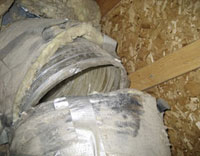
Do not make me reiterate: Duct tape is not for ducts. Duct tape is the number one sign of shoddy heating and air conditioning work. Duct tape specifically made for central air designs works O.K., but in reality, duct tape was not made for ducts and does not hold a seal for long enough. It was originally used in World War 2 to seal ammo containers. The name was changed to duct tape after the war to find a use for this handy tape. New HVAC certified duct tape should have an aluminum backing.


Wednesday, April 28, 2010

Is it really HVAC?

Denver HVAC
HVAC stands for Heating Ventilation and Air Conditioning. Any system that works to improve interior comfort can be considered HVAC. But if you want your Denver heating and air conditioning to work, it is best to consult a Colorado certified HVAC specialist. You can dramatically effect your energy bills by making sure your HVAC is up to par. Denver HVAC companies really make their money on big boxes, and medium and large office buildings where proper heating and air conditioning result in big savings on overhead.

The three functions of a Denver HVAC: heating, cooling and ventilation, became needs in the industrial revolution when people were crowded into factories and office buildings. Originally, these comforts were provided by a hodgepodge of fans, boilers and fireplaces. A proper Colorado HVAC provides comfort as well as clean air. Most Denver heating and cooling systems do not run under the strains of a full blown office space system, but a certified HVAC professional can still provide savings. For larger buildings, architects and engineers specifically design the heating and air conditioning systems to match the building and the HVAC to our Colorado weather. For it to be considered HVAC, it must be a truly unified system.

Heating is essential in Denver winters. Central heating consists of some sort of heating element like a boiler or furnace, a transport system to pull the heat into the room, and a thermostat to monitor temperature.

Unfortunately, air quality is going down, so in Denver ventilation systems are a must. Some construction or industrial sites need special ventilation to keep harmful fumes from workers. But even the average office worker wants clean air to be able to work properly.

Cooling is done by air conditioning except in very dry climates. Some homes in Denver use evaporative coolers, which cool through the natural power of water evaporation, and add moisture to the air.

Central air and heat pumps need a proper cooling charge. A certified Denver HVAC specialist should check your system for the proper charge. An incorrect amount of coolant will put a strain on your air conditioning or heat pump. Air flow out of the cooling system should also be optimized so it can go smoothly from your refrigerating element to the house.

Energy Star Qaulified HVAC

Denver HVAC
Heating and cooling account for more than half of the energy use in the average Denver home. You need heat to keep from freezing in Denver, and the piercing summer sun takes up money in cooling a Denver home. HVAC - Heating, Ventilation, and Air Conditioning is just what it says: the way you keep your home warm or cool. In a green state like Colorado, everyone is trying to do their part to reduce energy use... and save money. In Denver heating is a matter of survival, while few can give up air conditioning now. One way to keep Denver air conditioning costs down is to make sure your Denver HVAC system meets federal Energy Star guidelines.

These tips will not only lower your heating bills and emissions, they will also make your HVAC system work more effectively - and keep you comfortable all year.

The easiest, and often overlooked step is to replace your Denver HVAC air filters. Check your air filter every month, because especially in times of heavy use, Denver heating and air conditioning needs to work at optimal condition. Change your filter at least every 3 months. A dirty filter wastes energy because the HVAC needs more power to move the same amount of air through the clogged filter. Clean filters prevent dust and malfunctions to your heating system caused by dust. A dirty HVAC system can fail, and you do not want your heating in Colorado to fail during January.

Tune up your system. If you have a Denver HVAC contractor that you trust, calling them for a little tune-up is preventative maintenance. Your Colorado heating and air conditioning specialist should also install a programmable thermostat. These smart thermostats save you money and time over the year by shutting off when you are not home. If you are away from home at regular times, a programmed thermostat can save hundreds a year. Having the perfect Denver heating source means nothing if your HVAC ducts are not properly sealed. The ducts transfer all that precious warm or cold air to your room. Improperly sealed and insulated ducts can cost your upwards of a 20% increase in energy bills. Any Denver HVAC company worth its salt will seal your ducts and inspect them for free. Focus on sealing ducts that run through un-insulated areas like the attic, garage or crawlspace. Duct sealant and metal foil tape actually works much better than duct tape. If you want your Denver heating and air conditioning system to leak like a siv, use duct tape.

Your actual equipment should be Energy Star qualified. An old HVAC system in Colorado is probably costing you money. A professional Denver HVAC contractor can evaluate your system and see if upgrading part of it will be cost effective. Replacing old equipment with Energy Star certified HVAC hardware can save around $200 a year. Some of the main problems old or improperly designed Denver HVAC systems have are Low airflow, Improper charge, and Duct leakage.

Properly sized equipment will keep your system running efficiently. Too large a system will result in frequent on-off cycling. In Denver heating and air conditioning should not be on simultaneously! Incorrect sizing will also stress that expensive equipment your HVAC contractor installed.